Peter Stubler


Support
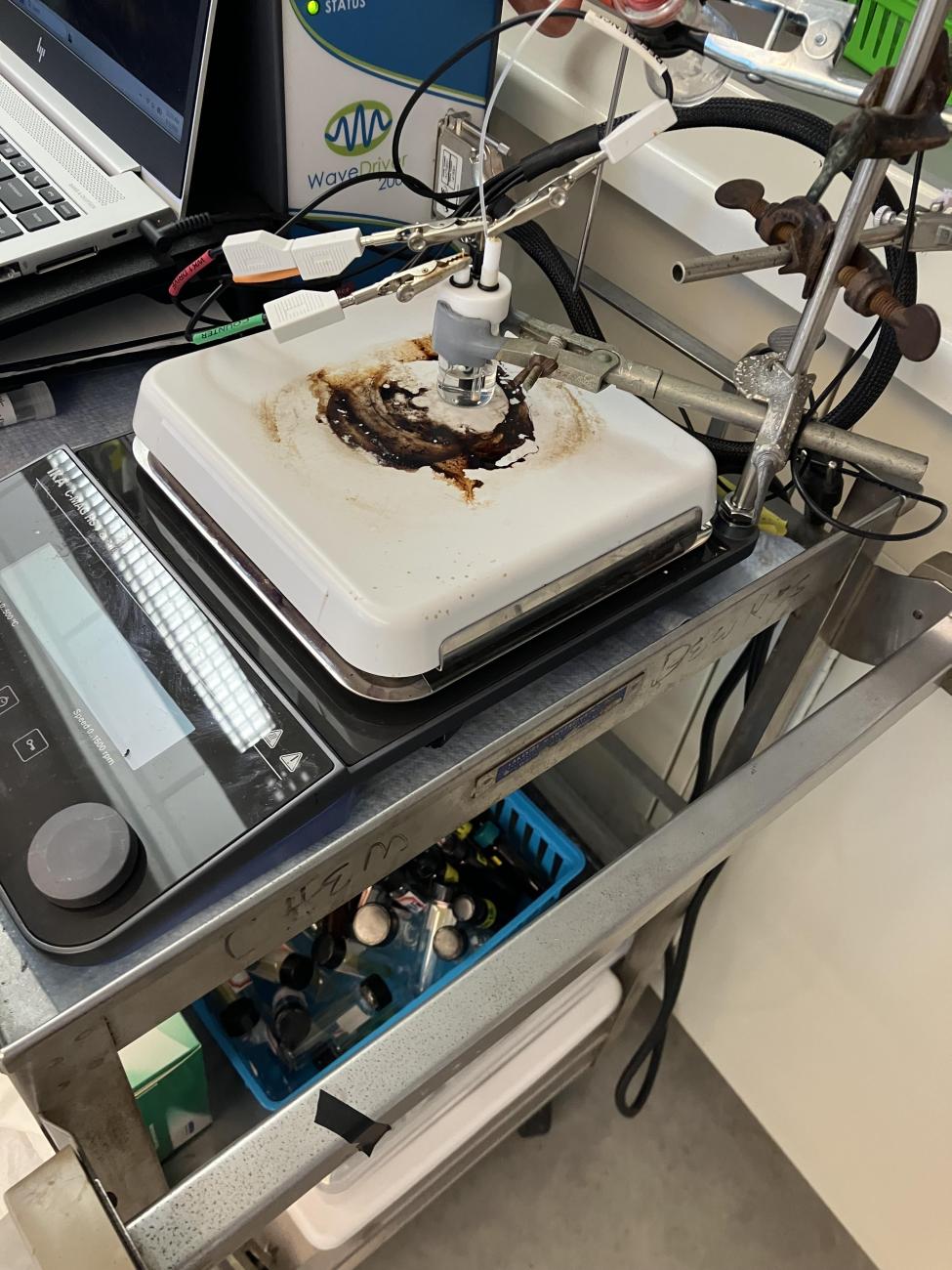
Methyl Orange is a clothing dye that belongs to the azo dye family. A group of industrial dyes characterized by two phenyl groups attached by a nitrogen-nitrogen double bond. Because of these dye’s light absorbent properties, their presence in an aquatic ecosystem makes it more difficult for light to be absorbed and used by plants, as a result posing serious risk to the entire ecosystem. These dyes are difficult to treat using common wastewater treatment methods, and methods to remove it are expensive. Therefore a cost-effective method of removing it would be immensely beneficial. One such method would be oxidizing the Methyl Orange, destroying it’s nitrogen-nitrogen double bond and removing color, and as a result, it’s light absorbent properties. However, this route could potentially lead to the creation of another harmful chemical in the water, as the aryl amines resulting from the oxidation could intercalate with the DNA of aquatic life, interfering with processes such as transcription and replication. To understand the oxidation of methyl orange, and potentially create a safe method of removal for it, it’s electrochemical data must be understood. To do this, several control experiments were conducted on Methyl Orange in an electrolyte solution, including scan rate dependent cyclic voltammograms in the positive and negative directions, 10 cycle cyclic voltammograms in positive and negative directions and differential pulse voltammetry in positive and negative directions. These were done on both Methyl orange, as well as Acid Violet 3, another azo dye for comparison. These scans were done on two types of electrodes, those being glassy carbon, and indium tin oxide.