Established in 2008 to honor the legacy of Daniel F. Sullivan '65, P'04 (University president 1996-2009) and his wife, Ann, this fund will support the University Fellows Program. President Sullivan has been a particularly strong proponent of this program, which brings faculty and students together for research and scholarly collaboration in a summer community of mentors and learners.

Summer 2025 - Research Fellowships

The Effects of the Cyclic Sigh on Brain Wave Activity

By

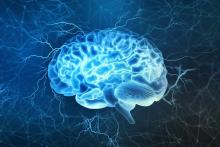
This summer, I had the opportunity to learn how to identify and analyze brain wave activity in different regions of the brain using electroencephalogram (EEG) technology. More specifically, I observed brain activity changes in human participants using the cyclic sigh breathing technique while undergoing physical stress. A cold pressor test, a procedure that involves participant’s placing their arm in a bucket of ice-water of 1 degrees Celsius, was used to induce physical stress. I devised the methodology of the experiment with aid from my mentor, Dr. Onyper.

Simulating Microgravity: Building a low cost Custom Clinostat with 3D Printing and Arduino

By

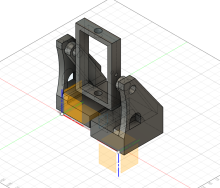
This summer research project explored the design and development of a 3D-printed clinostat, a rotating device used to mimic the effects of microgravity on biological samples. In microgravity, cells behave differently: they grow, divide, and organize in ways that aren't typically observed under Earth’s gravitational pull. Clinostats offer a way to simulate these conditions by constantly rotating cells, disrupting the unidirection of gravity and creating a near-weightless environment for experimentation.

Optimizing VOC Sampling Techniques for Improved Air Quality

By

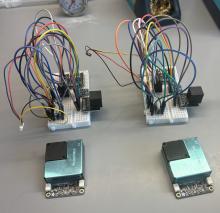
During my fellowship, I focused on finding ways to optimize air sampling techniques. Volatile organic compounds (VOCs) include a diverse group of chemicals that easily evaporate into the air and can have various origins. Exposure to VOCs has been linked to serious health effects, making it a significant public health concern. This fellowship worked to advance the already used methods of evacuated canister sampling and low-cost sensors (LCS).

Immune System Development in Frog (Xenopus laevis) Metamorphosis

By

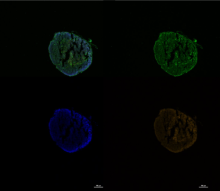
Throughout my summer fellowship, I spent my time in the Metamorphosis Lab researching Xenopus laevis tadpoles and how their immune system remodels during natural metamorphosis. Our research focused on the thymus gland as it is responsible for the development of T-cells, which protect the body against pathogens. The changes in microanatomy of the thymus were determined using multiple laboratory techniques.

The European Union’s International Climate Finance Framework: Between Leverage, Development, and Sustainability

By

This Research Fellowship project investigates how the European Union has reshaped its approach to international climate finance over the past decade. It begins by tracing key policy shifts and situating them within broader internal and external pressures from UN processes to economic and geopolitical developments. It then maps the EU’s major climate finance instruments by analyzing their stated goals, operational features, and priorities.

Bringing Electricity to Life: A Hands-On Exploration of Electromagnetic Induction

By

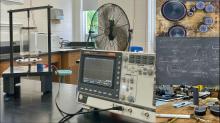
This research project explored electromagnetic induction, a topic that is often challenging for students. The primary goal was to create a hands-on learning experience to connect fundamental physics principles with the real-world applications of electricity and renewable energy. The project provided an opportunity to conduct a full research cycle, from initial concept and design to fabrication, data analysis, and final presentation.

Nationalism and Populism: How Hungarian Prime Minister Viktor Orbán is Using Nationalism to His Political Advantage

By

This summer, Emma explored literature on nationalism and its political uses within democratic societies. More specifically, it examines the patriarchal underpinnings of liberal nationalism. While nationalism is often associated exclusively with authoritarian regimes, it also plays a significant role in democracies, where it can be leveraged by political leaders to achieve specific goals.

Effects of Maturation and Experience on Delay Discounting

By

This summer I was granted the opportunity to work in the Experimental Analysis of Behavior (EAB) lab under the supervision of Dr. Adam E. Fox, where I began phase one of a multi-phase experiment investigating the effects of experience and maturation on impulsive choice behavior. The experiment looks at delay discounting specifically, with a task that involves repeated choices between smaller, sooner and larger, later rewards.

Creating a Sports-Based Framework for Enhancing Education in Data Science

By

I created a series of educational modules and data repositories for college-level statistics classes that use real-world sports data from figure skating, pickleball, soccer, and other sports to teach important statistical concepts, including ANOVA, Confidence Intervals, Data Manipulation, Log Transformation, and more. To adapt this approach for younger students, I also developed high school-level worksheets and lesson plans inspired by the New York Times' "What's Going on in This Graph?" series.

Processing: Poignant and (Somewhat) Darkly Humorous Reflections on Loss During Childhood and Re-Learning Writer’s Process

By

Though I originally sought out to write a series of fiction pieces utilizing dark humor, what transpired over the course of the fellowship was a rigorous lesson on adaptability, flexibility, and revision. The bulk of my project consisted of a set of autobiographical non-fiction works that, while featuring occasional dark humor, focused more so on the theme of loss during childhood than trying to perfectly emulate a specific genre.

Effects of Insulin Resistance on Cognitive Function

By

Insulin resistance (IR) has traditionally been studied in the context of metabolic disorders, most notably type 2 diabetes, but growing evidence suggests that IR also plays a crucial role in cognitive decline and neuropsychiatric conditions such as schizophrenia. My research explores this emerging intersection between metabolic health and brain function by developing a fast acting IR rat model using a high fructose diet.

Exploring Audio Recorder and Camera Trapping Methods in Riparian Corridors in St. Lawrence County

By

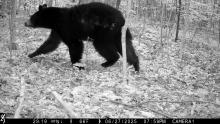
I spent the summer exploring the forests along the Oswegatchie, Grasse, and Raquette Rivers within St. Lawrence County. Working with Dr. Erika Barthelmess, we investigated the combined use of audio recorders and camera traps in evaluating the biodiversity along these corridors. We experimented with acoustic recording methods and explored how to manage the large datasets produced by passive biodiversity monitoring.

Summer 2024 - Research Fellowships

How much are follow-up interventions for workplace training worth?

By

My St. Lawrence University Summer Fellowship project focused on finding an economic valuation for the difference in learning between passive and active online follow-up interventions. I wanted to look at and compare different kinds of follow-up interventions for workplace trainings. I intended to put on a 30 person training and test the effectiveness of having them complete some follow-up learning at 4, 7, and 10 days before being tested 14 days after the initial training. 

Exploring Visual Representations of Mandelbrot Escape Velocity

By

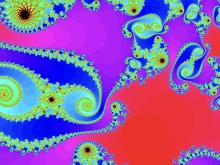
Mandelbrot escape velocity relates to the rate at which points move to infinity given input into a specific equation. Visually, this has previously been represented 2-dimensionally. My project explores different methods of visual representation, including 3-dimensional prints and colorful animations. This project is an extension to my spring independent research: "3-D Printing Mandelbrot Escape Velocity" and is being continued into this fall, as an Honors Senior Year Experience.

Storytelling in Video Games: A Study of How Narrative is Implemented in Games

By

Throughout my fellowship, I spent my summer immersed in the world of video game storytelling. With the guidance of my faculty mentor, English professor Paul Graham, I've been researching how game creators construct compelling narratives and build unique new realms by blending elements like art, music, dialogue, and more. 

A Praxis of Policing Grounded in The Ethics of Care

By

During my fellowship I took advantage of the opportunity to dive deeply into the ethics of care, a subject that since I first read about it, had held great significance to me, both academically and on a personal level. By doing this, I was able to engage with many philosophical concepts, authors, and articles that I would have probably never been introduced to within a traditional classroom setting. One of the most valuable aspects that I took from this experience was learning how to structure and be in charge of my own research project.

Time Perception of ADHD and PTSD in Female SHRs

By

This summer I was granted a fellowship to work under the supervision of Dr. Adam E. Fox in the Experimental Analysis of Behavior (EAB) lab. The focus of the project was possible time perception abnormalities in females with comorbid ADHD and PTSD. Both disorders have a substantial societal cost, their combined financial burden can be estimated at $355 billion in the United States in 2018 (Schein et al., 2022; Davis et al., 2022). Research has shown that patients with ADHD are at a greater risk of developing PTSD later in life (Wendt et al., 2023).

Deep Learning for Audio Categorization

By

During the St. Lawrence Summer Fellowship, Cooper A. focused on addressing the challenges faced by sound editors and designers due to the lack of standardized organization in large audio databases. The project involved curating a dataset of over 77,000 audio files, totaling 151 hours, from various sound editors, including his father’s work. Using machine learning frameworks like TensorFlow and PyTorch, the project developed deep learning models and audio spectrogram transformers to categorize different sound effects.

A Fragile State of Affairs

By

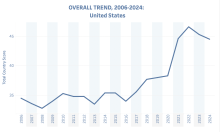
The United States is widely considered to be one of the most powerful countries in the world. The Fragile States Index (FSI), published by the Fund for Peace (FFP), measures countries on 12 different metrics to determine the likelihood that the state will collapse. One would expect the US to be one of the least fragile states in the world, yet it does not even make the top 20. The US ranks 41st on the FSI in between Poland and Barbados. Things look even worse when looking at individual metrics.

The Implications of Technology Use on the Ability to Feel a Sense of Belongingness

By

My summer research looked at the connections between technology and a student’s sense of belongingness in public elementary education. Through a combination of school visits, literature reviews, and reflection on the purposes of early education, I was able to begin developing a framework to think seriously about how schools should use technology with young children.  

Mapping Digital Dissent in the 21st Century

By

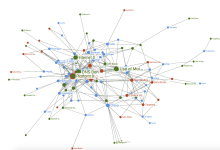
Social and political progress in the 21st century has been closely tied to the successes and failures of mass mobilizations that effectively utilized the internet during the 2010s yet faced increasing control over traffic online in the aftermath of global uprisings. Several nation-states, threatened by country-wide movements and the 2013 NSA revelations, directed their efforts towards implementing new policies and regulations to control the local Internet. This set a precedent for many others to adopt new methods and metrics of control.

Mapping Digital Dissent in the 21st Century

By

Social and political progress in the 21st century has been closely tied to the successes and failures of mass mobilizations that effectively utilized the internet during the 2010s yet faced increasing control over traffic online in the aftermath of global uprisings. Several nation-states, threatened by country-wide movements and the 2013 NSA revelations, directed their efforts towards implementing new policies and regulations to control the local Internet. This set a precedent for many others to adopt new methods and metrics of control.

Into the Woods: Storytelling through printmaking

By

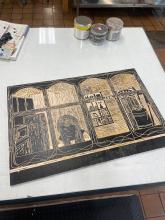
This summer I explored and researched the relief printing technique of woodcuts through experimentation under the mentorship of Professor Melissa Schulenberg, a renowned master Mokuhanga printer and one of my Senior Honors Project academic advisors. This opportunity allowed me to focus on the development, brainstorming, and artistic process of essential pieces for my Senior Project.