Glioblastoma Research and Translational Immunology
Support
This past summer I had the privilege of working as a Research Intern in Dr. Elias’s Laboratory at Brown University’s department of Molecular Microbiology and Immunology. I contributed to both experimental and scholarly research on glioblastoma, one of the most aggressive primary brain tumors. My internship bridged laboratory investigation with independent scientific writing, allowing me to gain experience in both the technical and intellectual dimensions of biomedical research.
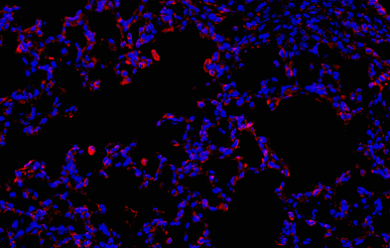
Throughout my internship, I received mentorship from Dr. Jack A. Elias, Dr. Chun-Geun Lee, Dr. Sadanaga, and Dr. Hanseok Jeong, with additional supervision from Dr. Steven A. Toms of Southcoast Health’s Department of Neurosurgery. My responsibilities included practicing and refining core laboratory techniques while generating data in support of ongoing projects. Specifically, I worked on macrophage polarization experiments within Dr. Jeong’s research program and contributed to investigations on pre-alveolar type-1 transitional state (PATS) and aberrant basaloid cells under Dr. Sadanaga. Both of these research projects tied back to uncovering the pathways of Chi3L1. These collective experiences provided me with interactive training in the process of experimental design, data validation, and analysis. All while also nurturing my ability to troubleshoot and adapt to the complexities of translational science.
In parallel, I composed an independent review article on Chi3L1 modulation in glioblastomas. This review paper synthesizes current findings on how this molecule shapes the tumor microenvironment and influences the effectiveness of immunotherapies. Consolidating all of these components allows us to construct a clearer picture of the tumor microenvironment and how we can move forward with new and combination therapies. Writing under the guidance of Dr. Elias and Dr. Toms challenged me to critically evaluate diverse pieces of literature and to articulate the clinical relevance of molecular discoveries across multiple fields within medicine. This dual engagement in both bench research and scholarly writing strengthened my capacity to think across scales, from researching molecular mechanisms to constructing therapeutic strategies. This experience has reinforced my interest in pursuing a career that incorporates both clinical practice and research.
Overall, this internship was transformative in both scope and depth. It offered me the opportunity to meaningfully contribute to ongoing research while developing technical proficiency, scientific writing skills, and an appreciation for the collaborative nature of translational medicine. The lessons and pure knowledge I gained, through literature synthesization and mentorship guidance, will forever guide my future pursuits in neuroscience, medicine, and cancer immunology.