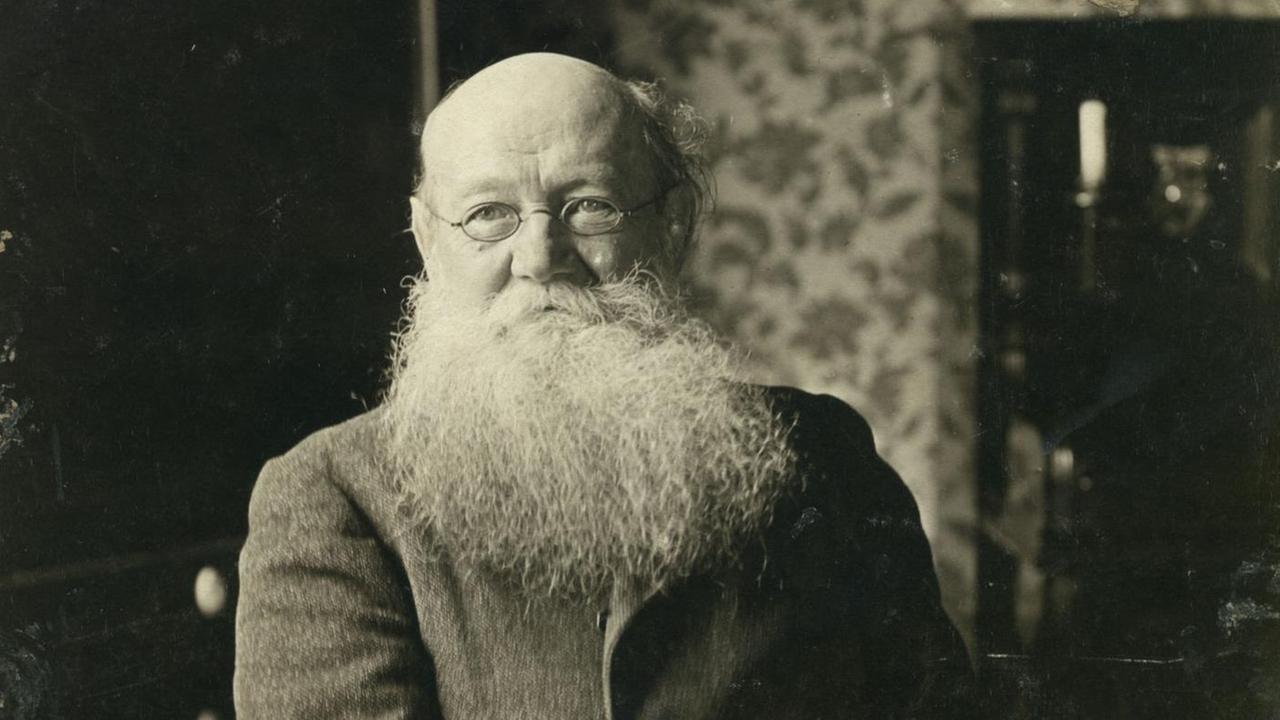


With this project, I initially set out to chart the entire genealogy of the concept of mutual aid—broadly speaking, the assumption that cooperation could sustain social order without coercive authority—in the anarchist tradition of political thought, believing that it stemmed from Peter Kropotkin's (1842-1921) book Mutual Aid: A Factor of Evolution, published in 1902. However, while conducting preliminary reading of early anarchists' works written before Kropotkin's Mutual Aid, I discovered that mutual aid as a concept is present in the theories of every early anarchist. Moreover, it seemed like the entire ideology was resting on this assumption, and, rather than coming up with it, Kropotkin used scientific argumentation to provide a codified explanation and justification for something that all anarchists intuited in their own ways, and for something that was so evident in nature.
I conducted a thorough study of the early anarchist movement and found that scholarly literature seems to neglect the importance of mutual aid in anarchist thought. I read books, newspaper articles, and pamphlets by the movement's leading figures, such as Pierre-Joseph Proudhon (1809-1865), Mikhail Bakunin (1814–1876), Errico Malatesta (1853–1932), Élisée Reclus (1830–1905), and Kropotkin, noting the prevalence of base assumptions akin to mutual aid. Additionally, I read and wrote about debates among 19th-century evolutionary biologists to understand how Kropotkin conducted genuine scientific research while also using the Darwinian framework to legitimize mutual aid and make anarchistic principles more mainstream.