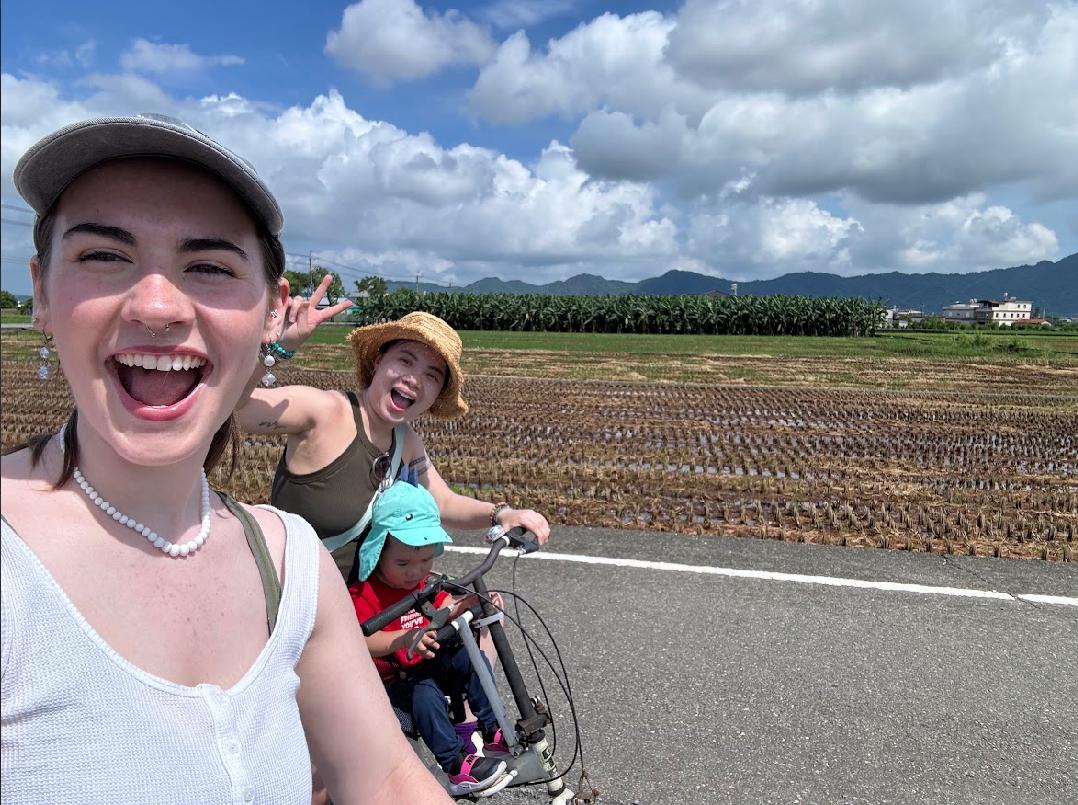

In assistance to Dr. Stephanie Wang’s work “Negotiating Hakkaness: Gender, Labor, and Identity Across Chinas, Taiwan, and Malaysia," I conducted research under her direction across cities in China and Taiwan examining Hakka identities, a Han Chinese subgroup whose communities have historically suffered from displacement and marginalization. Our research was driven by the intersections of gender and ethnic and cultural identity that Hakka women embody. We examined how Hakka women's identification has been reshaped through immigration, labor, and gender expectations. Sights we explored were museums and ancestral shrines in Beipu and Meinong in Taiwan that are notable Hakka enclaves, as well as in Meizhou and Xingning China which are frequently considered the origin of Hakka. Our research contributed to how displacement and immigration are understood in forming identity and specific to our research on how ethnicity and cultural identity impact the construction and reconstruction of gender and labor expectations.
Being able to navigate this research through on-the-ground experience was a remarkable privilege. I have found myself connecting and aligning with many Hakka women we have met in our travels, despite not being able to communicate with each other, simply hearing of their stories and to be in and to see the spaces they call home and work has been profoundly intimate and special. Therefore, it goes without saying that I wouldn't have the same curiosity and dedication in conducting this research if I didn't leave the classroom, if I didn't leave the U.S.