

Support
Bats in the Northeastern US offer important ecosystem services such as eating their body weight in insects like mosquitos and crop pests. Unfortunately, bats are under threat from habitat loss, wind turbine strikes, and White Nose Syndrome. Due to their decline and importance, it is critical to monitor their diversity and abundance to inform their conservation.
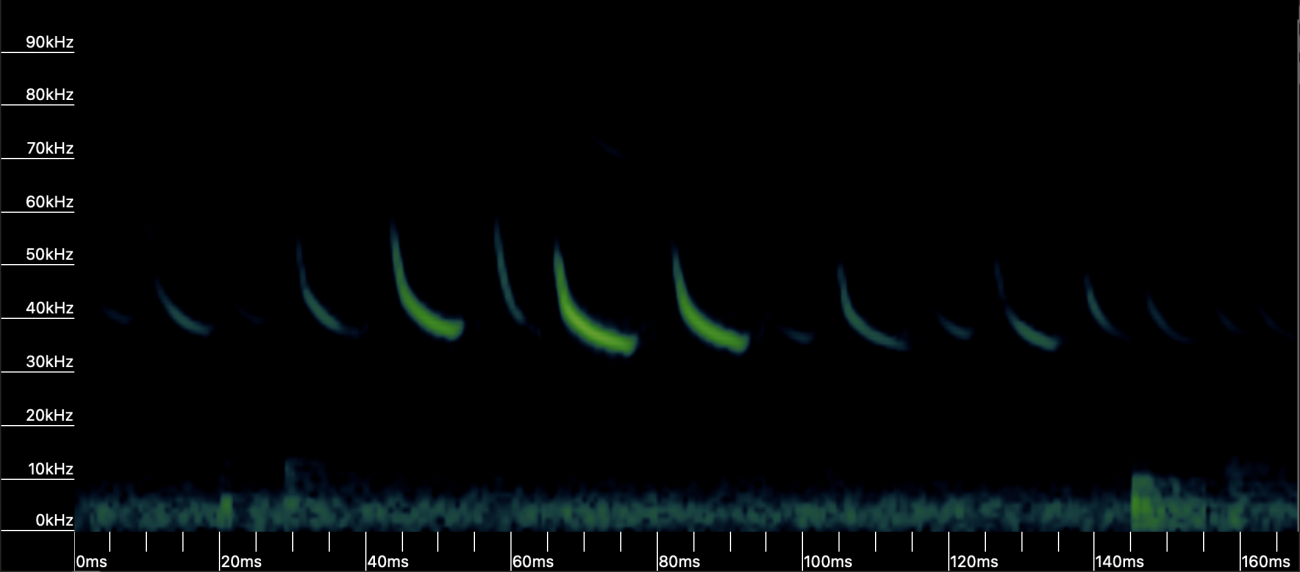
During my SLU Fellowship I surveyed bat diversity through passive mobile acoustic monitoring. These surveys involved attaching an AR125 ultrasonic recording device to a SLU van and driving along predetermined routes while recording bat calls. The routes were of varying habitat, including: agricultural, deciduous forest, and evergreen forest. I found six out of the nine bat species that inhabit New York to be present in the recordings, including the endangered Myotis sodalis (Indiana bat). Myotis sodalis was recorded only in agriculture and evergreen forest, while the other five species (Lasiurus borealis, Lasiurus cinereus, Lasionycteris noctivagans, Myotis lucifugus, and Eptesicus fuscus) were recorded in every habitat type. Eptesicus fuscus (Big Brown bat) was recorded the most overall.
Further analysis is needed to determine how factors such as habitat type affected which species of bats were present.