
Biology Department
Support
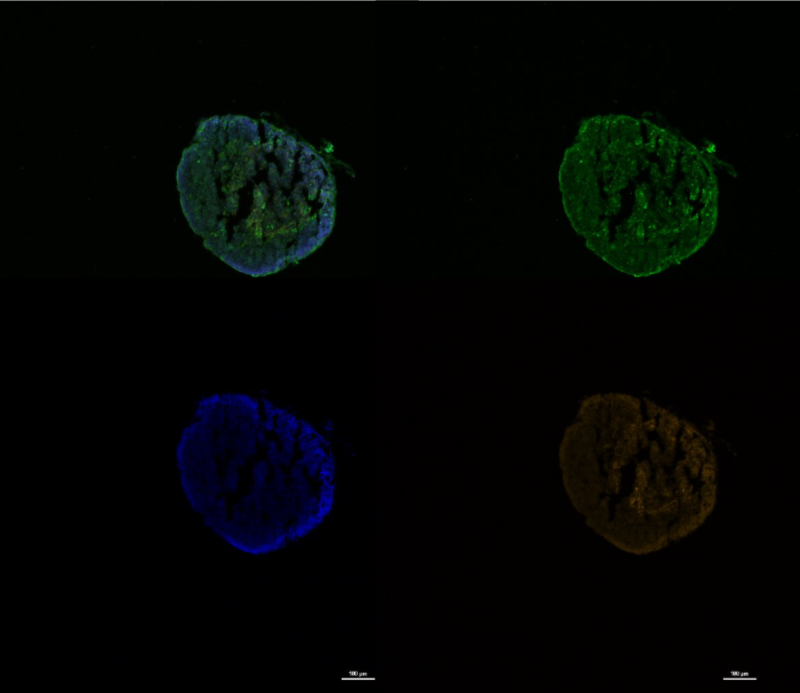
Throughout my summer fellowship, I spent my time in the Metamorphosis Lab researching Xenopus laevis tadpoles and how their immune system remodels during natural metamorphosis. Our research focused on the thymus gland as it is responsible for the development of T-cells, which protect the body against pathogens. The changes in microanatomy of the thymus were determined using multiple laboratory techniques. The glands were cryosectioned, fluorescently labeled using immunohistochemistry, and imaged with a confocal microscope. The fluorescent markers anti-e-cadherin, anti-active caspase-3, and anti-phosopohistone H3 were used to identify epithelial tissue, apoptosis, and cell proliferation, respectively. We can use this information to map cell death and growth in the thymus gland for each developmental stage.
My work over the summer was invaluable as I not only became familiar with a variety of laboratory techniques but also learned how to interact and share my findings with my peers. Every week, our research group met with other SLU Fellows to discuss our projects and how to present our findings. This taught me how to convey experimental designs, methods, and results clearly and concisely.