

Support
In the summer of 2025, Rosemary examined organism interactions within shallow lagoons, analyzed carbonate sediment composition, and identified the key sediment producers and mapped lagoon-floor habitats. The research she completed contributes valuable insights into sediment dynamics, functioning ecosystems, and the enhancement of her knowledge of modern shallow-marine tropical environments.
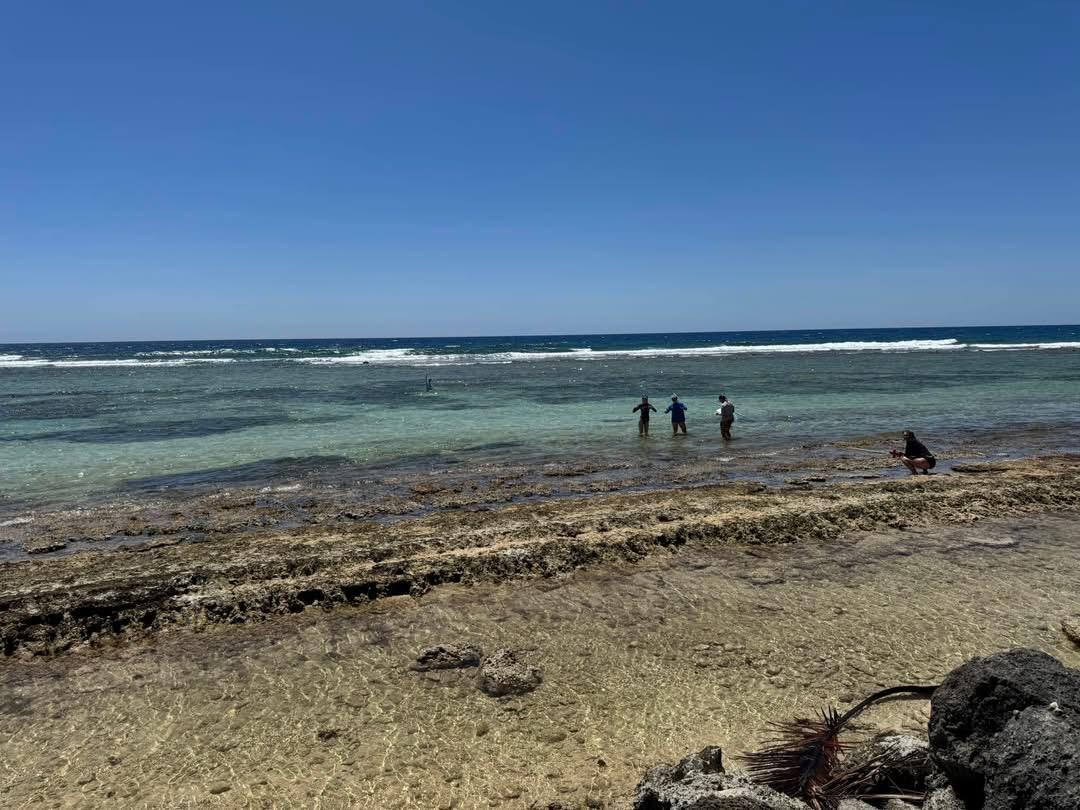
The collection of her data took place during a regional field studies course (GEOL-320-01) which included an 8-day field trip to San Andrés, Columbia. During this course, a field project was completed with the emphasis on studying the habitats and microbiota present in the near shore lagoon of Mateo Beach. With the support of her colleagues, Rosemary was able to collect 21 samples from the project to further research over the summer. Of the samples a portion was sent out to to a thin-section preparation specialist to produce grain mount thin-sections. The remainder of the samples were run through a series of test including grain-size distribution via the use of a sieve nest and shaker, petrographic analysis via the use of a petrographic microscope to analyze depositional facies, and characteristic grains (e.g. Halimeda, Echinodermata, Foraminifera, coral fragments, and various mollusk), X-ray Diffraction at Union College to provide insights into the chemical composition of carbonate minerals (e.g. Low Mg Calcite, High Mg Calcite, Aragonite), and digital mapping.
Mapping consisted of three separate sets including bathymetric maps detailing the contours of the ocean floor, underwater topographic features, and organic build ups; Habitat maps providing insight into the relationships between biota, sediment composition, and habitat distribution; Facies maps indicating the spatial distribution of sedimentary facies.
During her eight weeks on campus her findings will culminate in a presentation at the 2025 Geological Society of America Meeting, and a Geology Honors Thesis: highlighting the study’s significance in marine geology, and environmental dynamics.