
Support
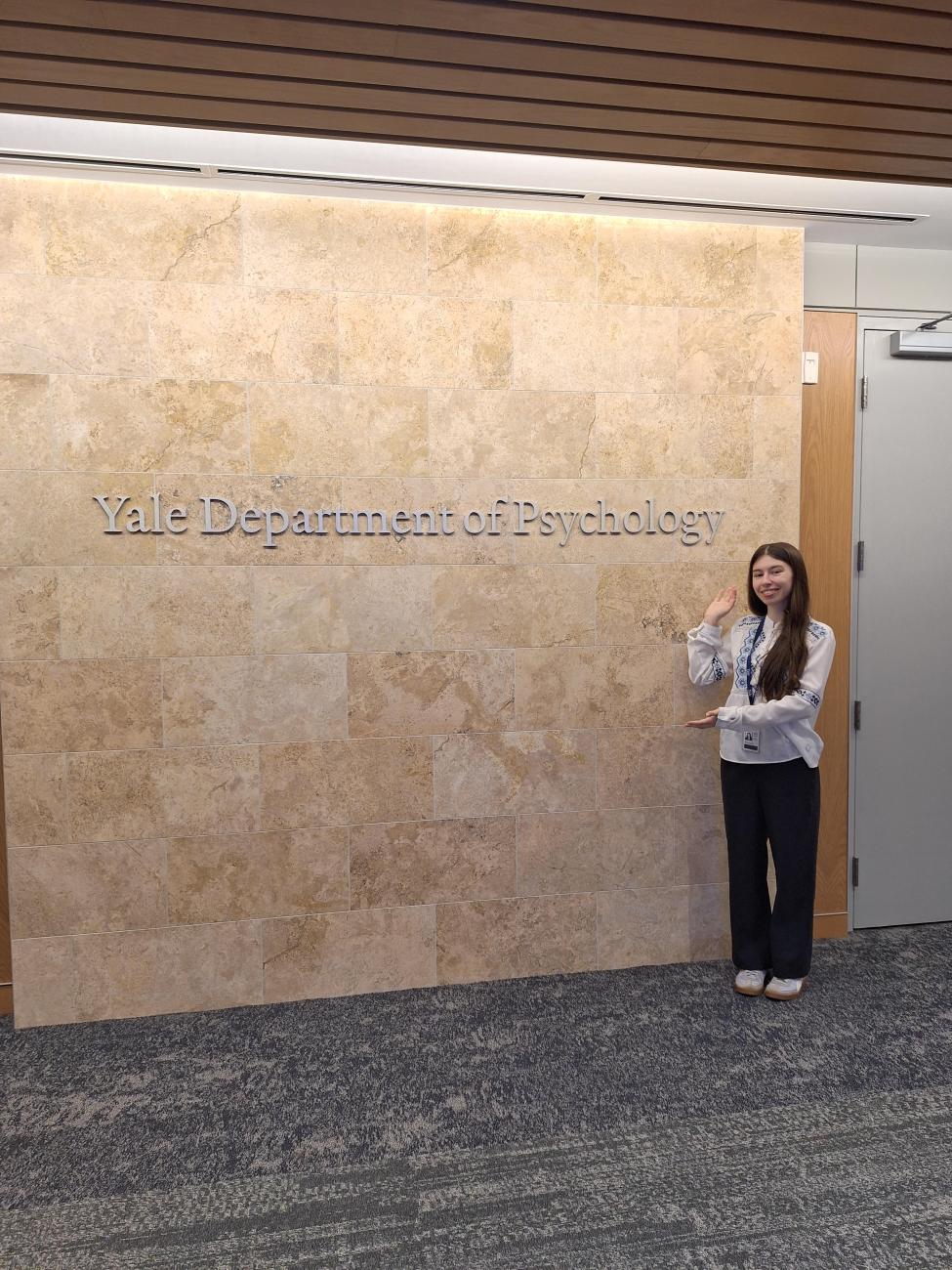
I have been part of multiple different research labs at SLU, from working with rodent models and delay discounting paradigms, researching motor performance under stress in humans, or human adaptation to different geometries in Virtual Reality, yet this summer, I had the opportunity to work as a research assistant in the Computational Clinical Science Lab at Yale University, researching suicidal behavior - an experience that was both intellectually transformative and deeply meaningful for my development as a researcher.
The lab’s work is highly interdisciplinary and involves bringing together clinical psychology, computational methods, digital phenotyping, ecological momentary assessment, and suicide-risk research. Being part of such a collaborative environment at Yale allowed me to see how psychological science can be strengthened through quantitative modeling, real-time data collection, and cross-disciplinary approaches.
During the summer, my duties as a Summer Research Assistant involved supporting the TRACE Ecological Momentary Assessment (EMA) through participant compliance monitoring and data-quality checks, while also developing an independent project using ecological momentary assessment data. One of my primary research interests is stress and anxiety; therefore, I was already familiar with the existing primary literature. For my independent project, I decided to examine whether daily feelings of not deserving to feel better were associated with same-day nonsuicidal self-injury urges, while accounting for anxiety and stress. Through this work, I expanded my coding and statistical skills in R, especially in data cleaning, person-mean centering, multilevel modeling, and visualizing model results.
Beyond my independent project, I had the chance to attend lab meetings, journal clubs, and seminars at the Yale Wu Tsai Neuroscience Institute, which exposed me to a wide range of research questions and methods across psychology, psychiatry, neuroscience, and computational science. These experiences helped me better understand how rigorous research at a big research institution is developed, discussed, and refined.
My summer in New Haven was incredibly inspirational and a formative experience for the scientist that I am yet to become. It strengthened my interest in clinical psychology research, expanded my confidence in coding and data analysis, and gave me a clearer sense of the kind of interdisciplinary research environment I hope to be part of in graduate school and beyond.