

Support
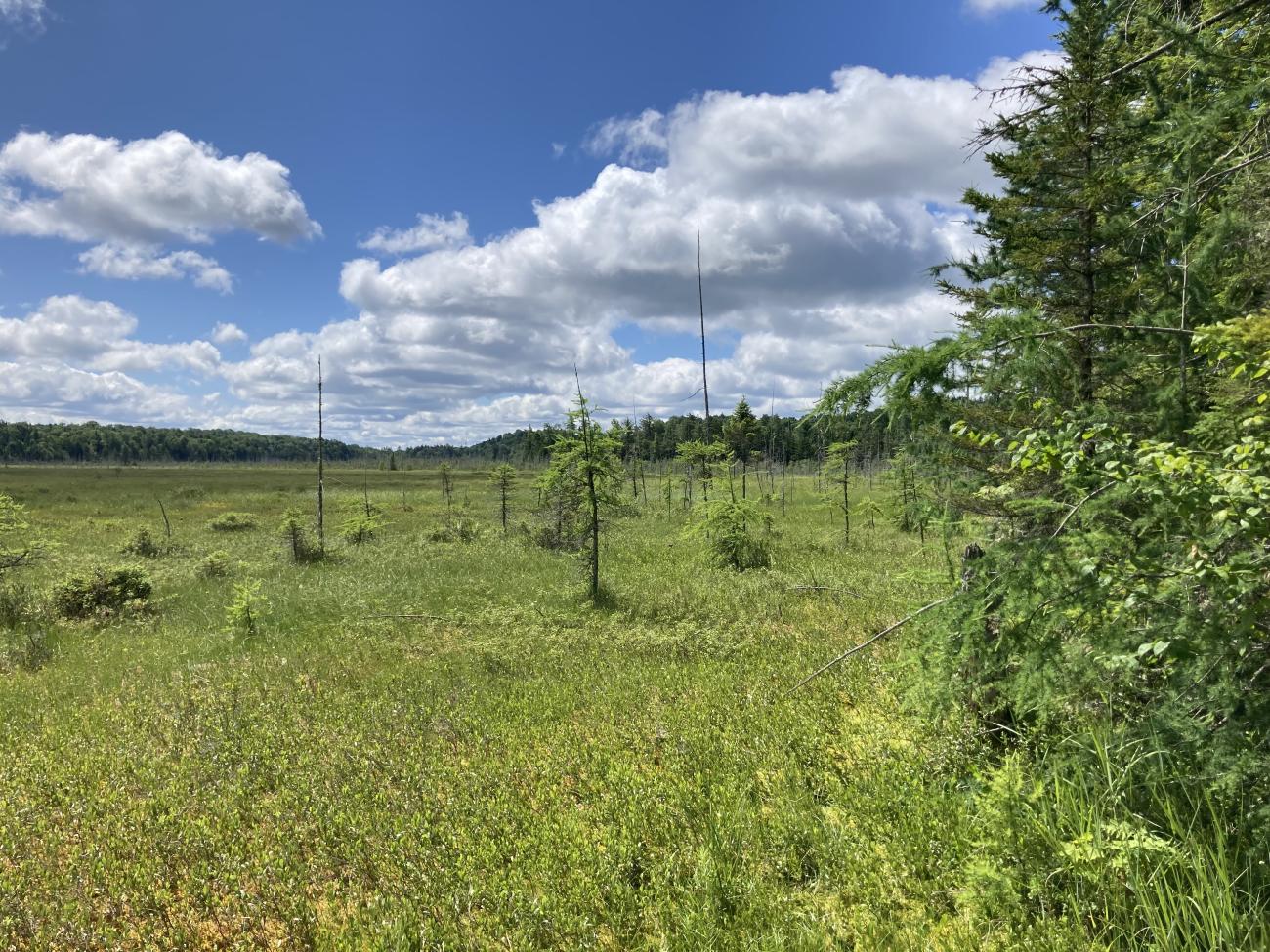
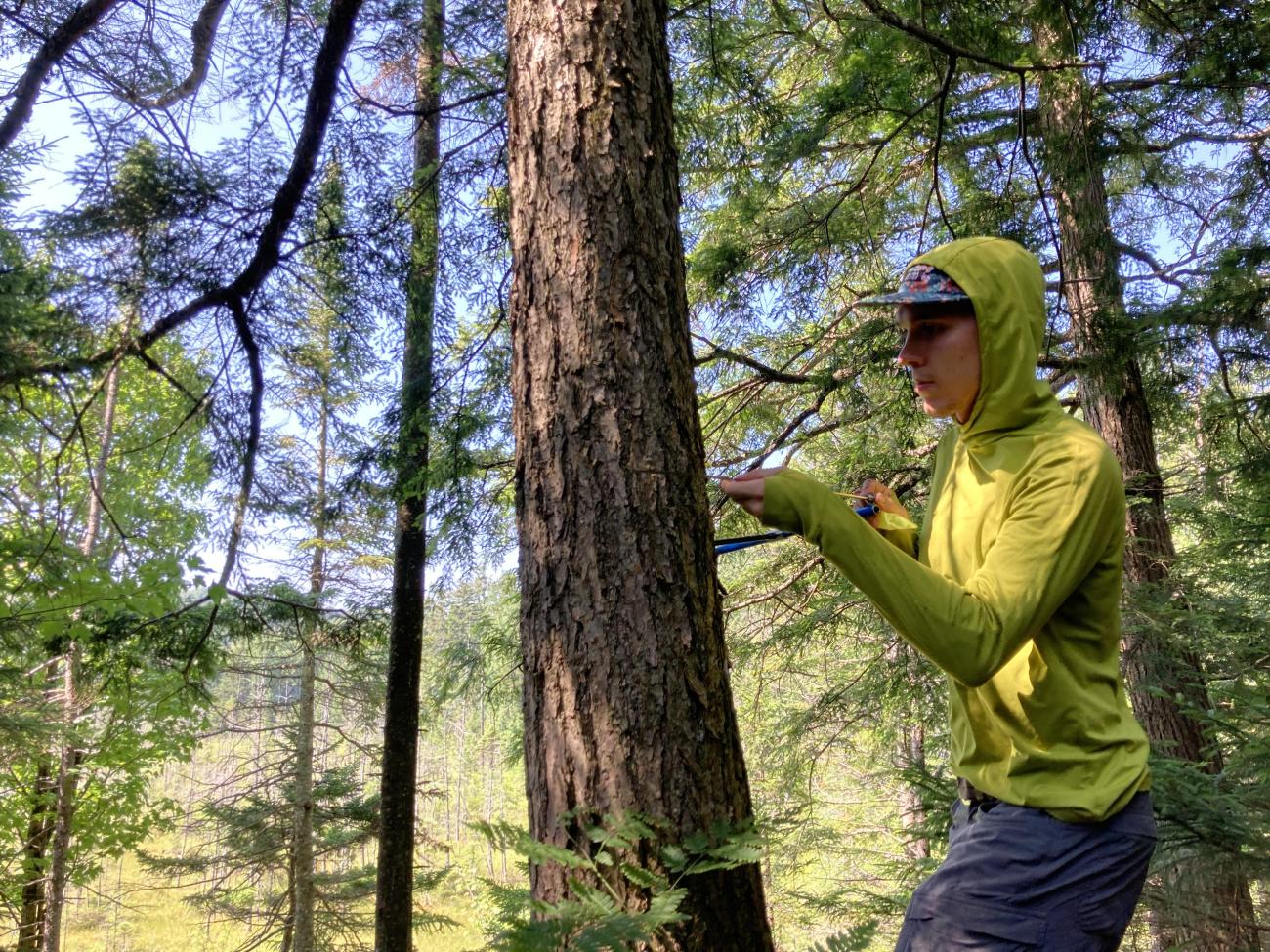
Each ring in a tree's trunk is a time capsule recording everything from temperature to streamflow in a given year. In the Adirondack Mountains, some Eastern Hemlocks (Tsuga canadensis) have been keeping this journal for more than 300 years! This summer, I cored 35 trees (16 hemlocks, 15 red spruce, and 4 black spruce) along the edge of Fox Fen, an ecologically sensitive wetland whose unique setting makes the trees especially sensitive to changes in climate. My focus was on reconstructing shoulder-season temperatures (March, April, September, and October) since climate change is lengthening these transitional periods, potentially impacting tree growth. Understanding this relationship may help future studies predict how northeastern ecosystems will react to a warming climate.
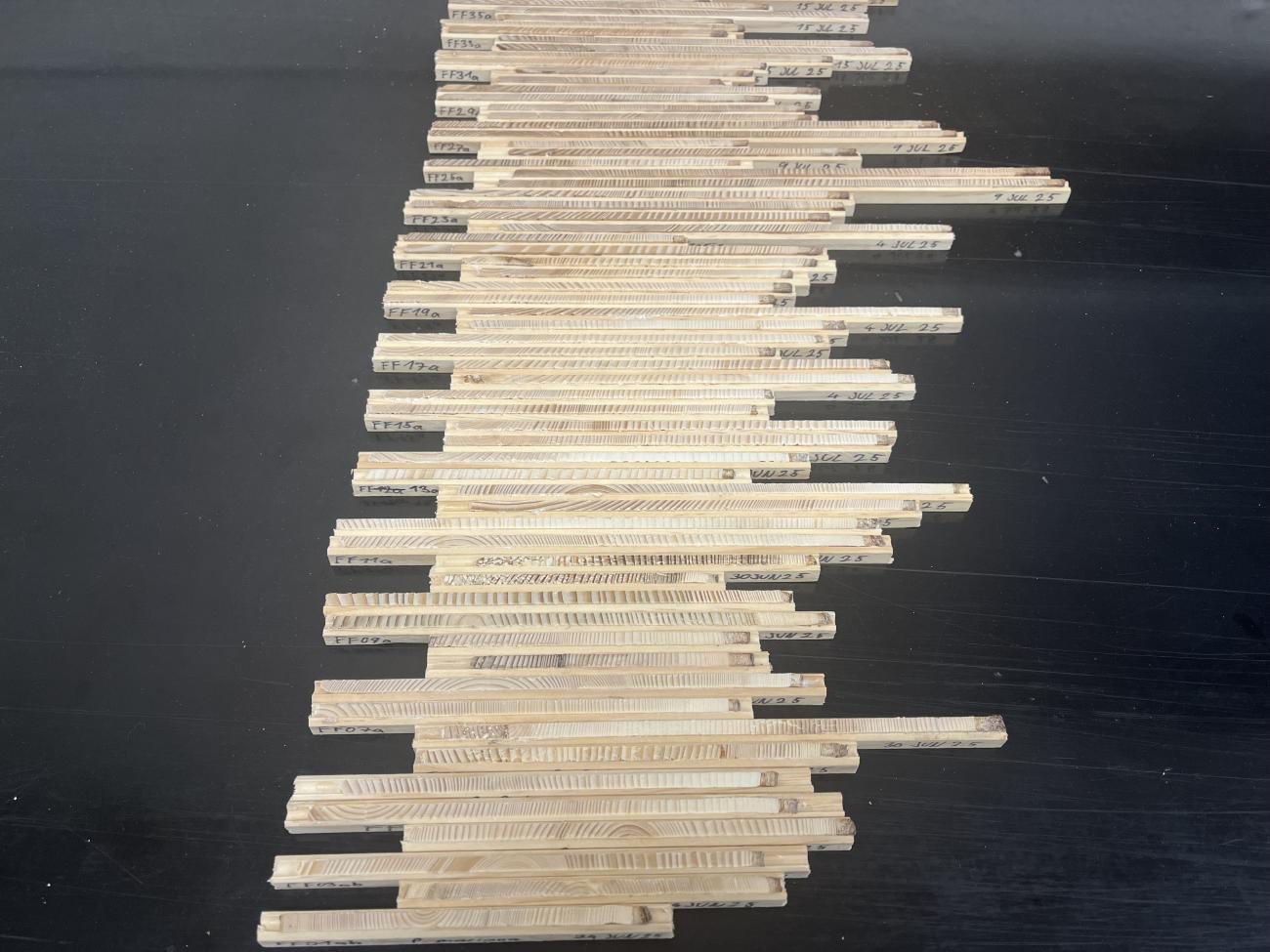
All collected samples were sanded and polished to prepare them for digitization and microscopic analysis. My initial data revealed that out of the three species, Eastern Hemlocks exhibited the highest correlation of ring widths between cores, making them a promising candidate for an accurate climate proxy. As such, I moved forward with just the 16 Hemlock cores. I subsequently used ARSTAN, a specialized statistical program, to isolate each core's decadal climate signals while removing age-related growth trends. Once this was completed, I used PCreg, a software developed to conduct principal component regressions based on tree-ring data, to reconstruct shoulder-season temperatures extending back to 1696. Since instrumental climate data started being recorded in this area in 1922, this extended our understanding of the region's climatic variability by 226 years.
The reconstruction revealed substantial decadal variability, including a well-documented mid-19th-century cooling period from 1839-1863 (cf., Mann et al., 1999), possibly originating from a volcanically induced decrease of radiative forcing following numerous major eruptions (e.g., Crowley, 2000). This project allowed me to gain valuable experience in the field of paleoclimatology, develop research skills, and most importantly, engage with a meaningful question that has real impacts on our understanding of the environment. In October, I will travel to San Antonio, Texas to present my findings at the annual meeting of the Geological Society of America.