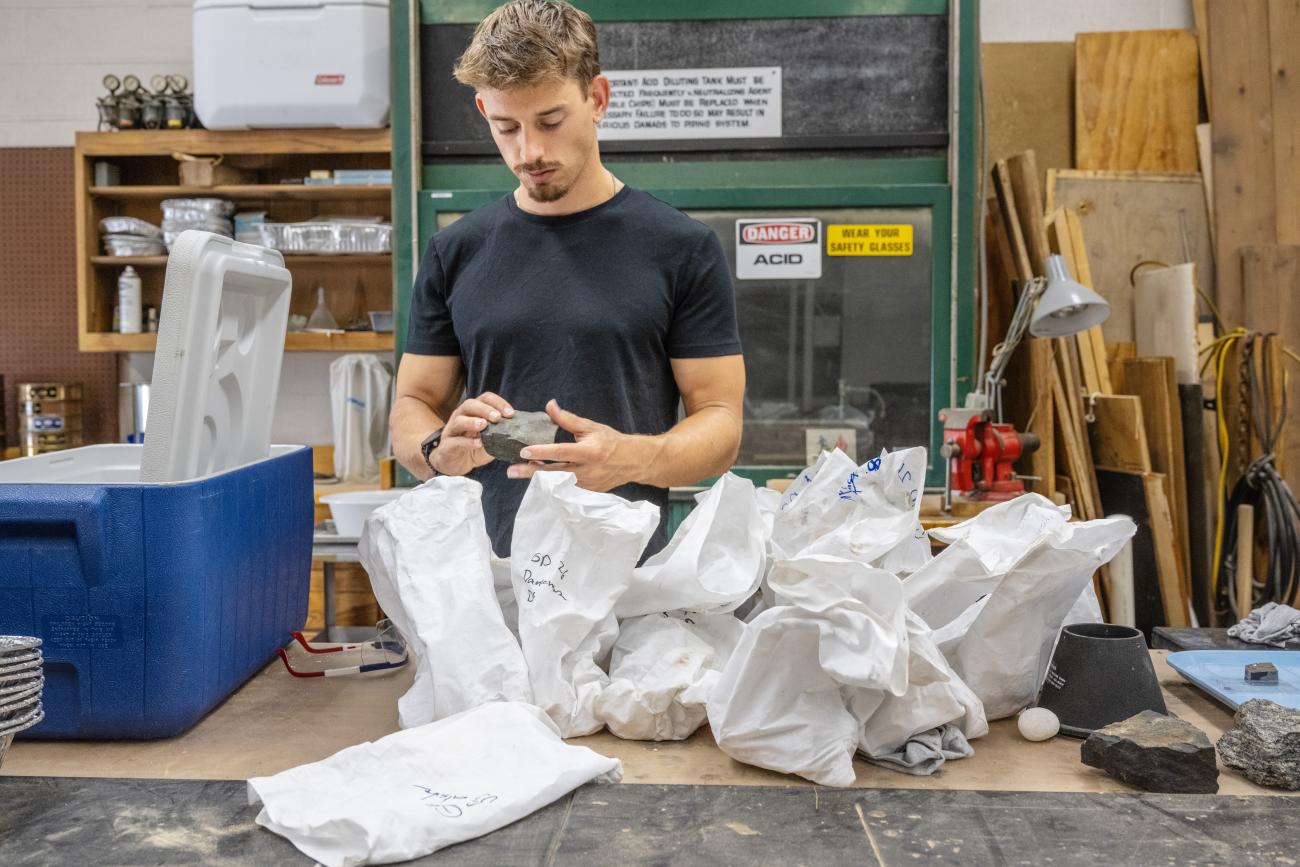


This project investigates the conditions under which basaltic dikes formed in the Adirondack Highlands and Lowlands of Northern New York. Fieldwork was used to collect samples based on previous geochemistry data and GIS work, aiming for higher MgO bearing dikes. Detailed observations in the field were combined with laboratory analysis, including whole-rock analysis, petrography and electron microprobe work made easy by the machines in the geology department.
The chemical composition of olivine crystals and their surrounding melt can be used to estimate the temperature and water content of the magma when the dikes formed upwards of one billion years ago. These results will pair with previous research to broaden our understanding of the region's magmatic and tectonic background and investigate if modern thermometry and hydrometry techniques can be applied to much older, altered rocks.