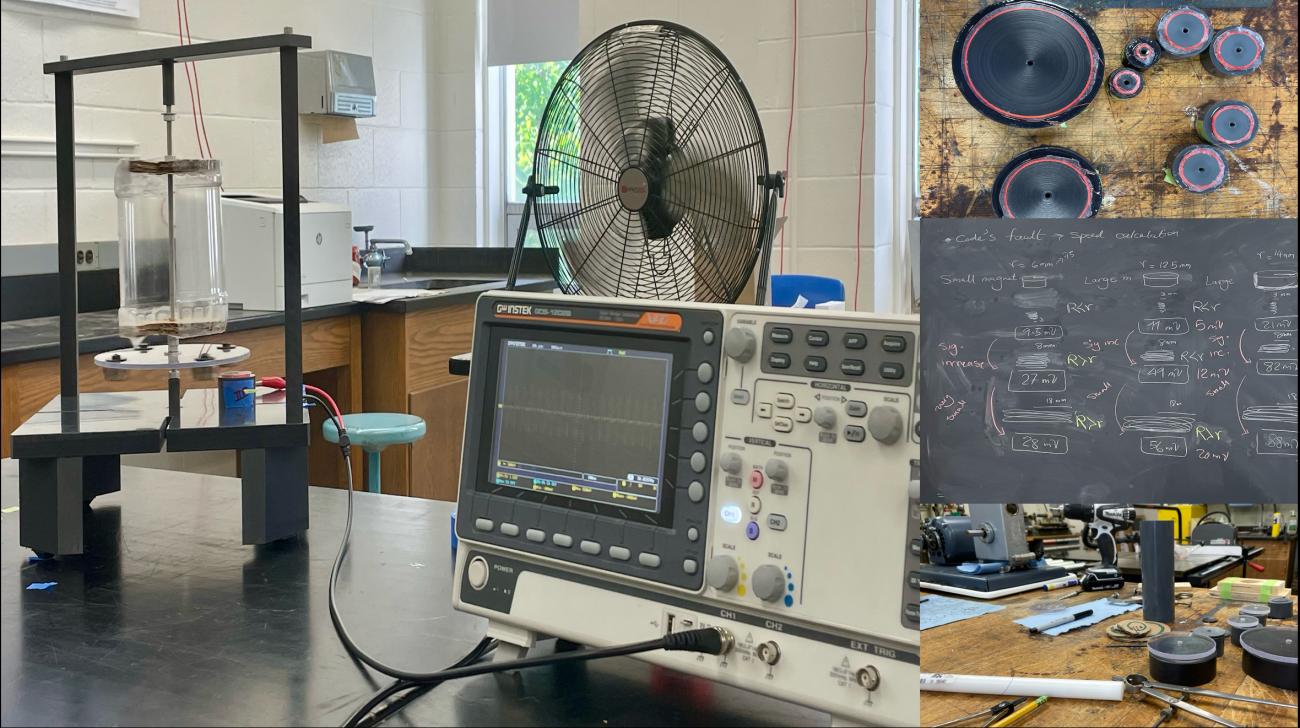


This research project explored electromagnetic induction, a topic that is often challenging for students. The primary goal was to create a hands-on learning experience to connect fundamental physics principles with the real-world applications of electricity and renewable energy. The project provided an opportunity to conduct a full research cycle, from initial concept and design to fabrication, data analysis, and final presentation.
The initial phase focused on engineering design. Using Autodesk Fusion, the experimental setup was developed through an iterative process of 3D modeling, prototyping, and material optimization for components like the Savonius wind turbine. This design was then physically constructed, providing valuable hands-on workshop experience.
The project then transitioned to computational analysis to explain the experimental data. This involved developing Python scripts using libraries such as NumPy, SciPy, and Matplotlib. These tools were used to build numerical simulations of the magnetic field and perform non-linear regression to carefully compare different physical theories against the measured results.
The fellowship culminated in a research poster synthesizing the skills developed in project management, engineering design, and computational physics. A key outcome of this research is an educational tool designed to provide students with a more intuitive grasp of electromagnetism and the principles of renewable energy production.