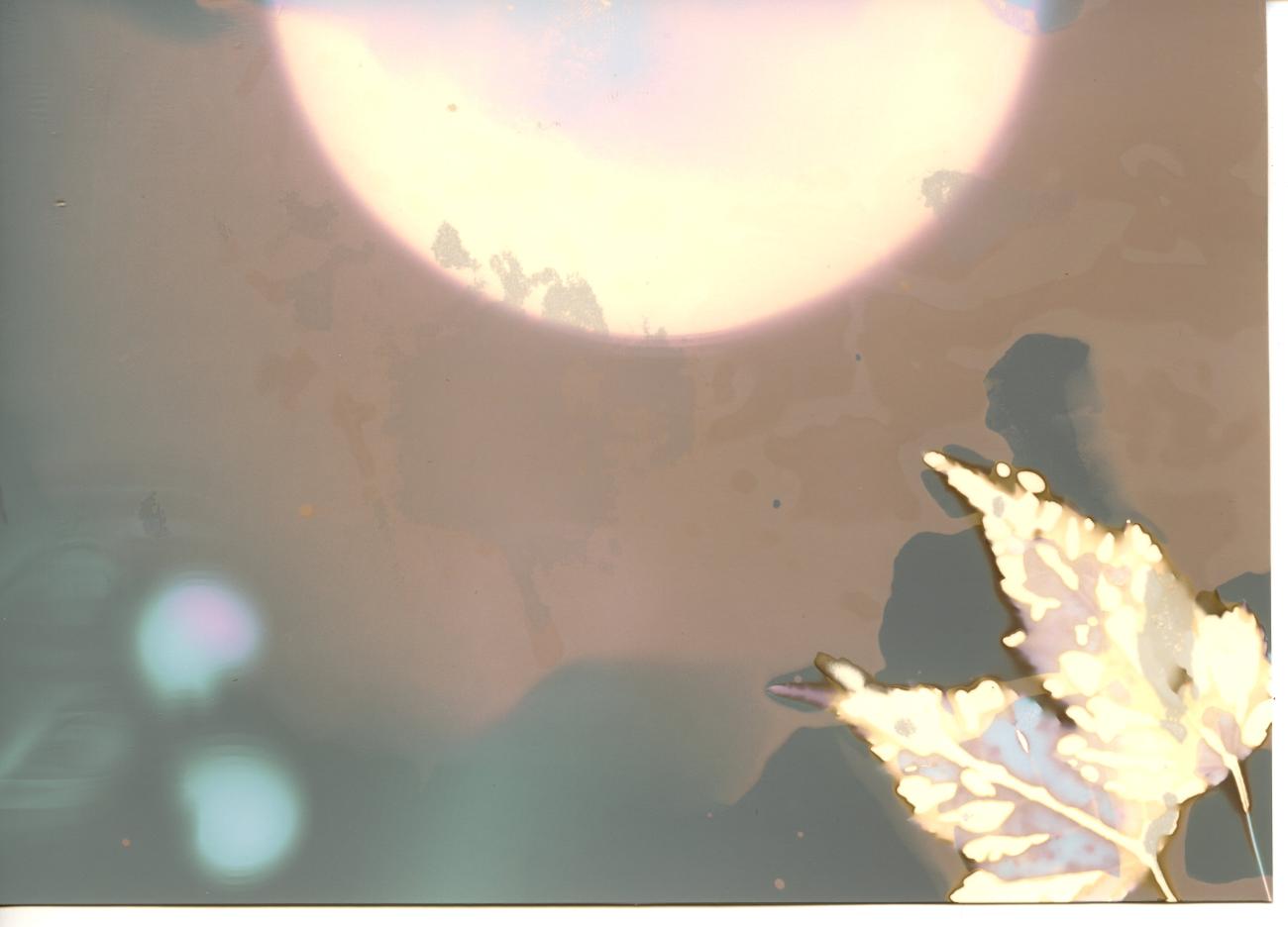


Support
What is it to 'be" an inanimate object? A true answer to this question is unknowable to us. Yet, as a kid, I remember thinking about how trees probably wished they had legs and the jealousy they must have felt seeing us walk. Or how I gravely cared for a pen during school that wrote smoothly and grieved when I had lost it. We share a mutual darkness with objects, but through my project I wanted to instill curiosity into why we may sometimes extend human empathy towards objects and what that reveals about us and the world he inhabit. Focusing on the writings of Joshua Simon, Graham Harman, Susan Sontag, and Jose Ortega y Gasset, I deeply considered object ontology and how photography as a medium can communicate and instill object empathy.
Assessing my own anthropocentric tendencies, I turned four objects into cameras: an old coffee tin, an old cinnamon tin, an empty spam can, and a Red Bull can, to take photographs from their perspective in order to meditate on the idea of "being" an inanimate object. But as I mangled these objects and turned them into tools for my own utility, even struggling to work with some of these cameras to take photos, I turned to the process of lumen image making. Lumens are an alternative photographic process that uses expired photo paper and captures the shadows of objects laid atop the paper in the sun, leaving behind a beautiful range of colors and contrasts between the areas exposed and unexposed. Lumens as an art-object are volatile and fade quickly if not fixed with chemicals, and by fixing them they lose their vibrancy. That was a crucial aspect of the medium that I wanted to use to convey the flawed practice of fixing and preserving mortal beauty. Feeling guilt for the mangling of these four objects, I used lumens to create abstract images that relayed the dreams of these objects with their impressions and shadows left behind. My images are fully arranged for viewers to follow what these objects have seen and what they dream of.