Assessing Bivalve Stress Response for Biomonitoring in Freshwater Systems


Support
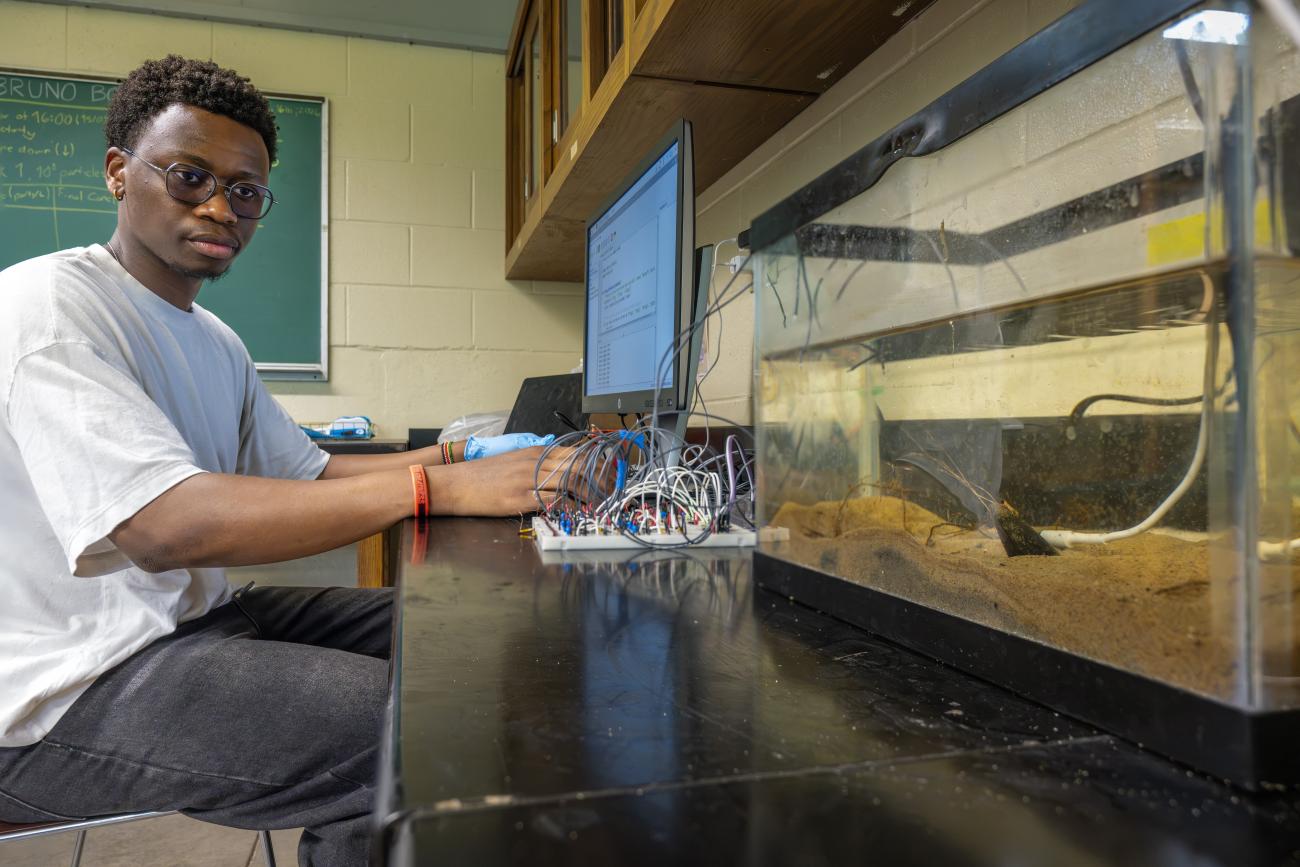
My research investigated the stress response of freshwater clams to microplastics in order to evaluate their potential as a low-cost alternative to conventional environmental pollution monitoring techniques. As bivalves they have a natural valve gaping mechanism (open and close) that they use to filter feed themselves and acts as a physiological stress response to environmental changes. Microsensors were attached to the clams and displayed a signal on a monitor in response to their valve movements. The preliminary results indicate that the clams filtered the microplastics and at certain concentrations demonstrated a discernible change in gaping frequency when microplastics were introduced into the system. This is promising in terms of utilizing their natural abilities to monitor and mitigate the environmental impacts of microplastics
In the process of designing and executing this project, I learned an array of interdisciplinary scientific skills. For instance, the microplastics were made by fragmenting pieces of plastic HDPE (High-Density Polyethylene) containers using a high speed multifunctional grinder. Additionally, I had to familiarize myself with using a Neubauer Hemocytometer which is typically used to count red blood cells under a microscope, but I used it to count and standardize microplastics concentrations.
This experience has allowed me to familiarize myself with the research process, and the technical versatility, project design, and data analysis skills I have developed have provided a strong foundation for my future work. More broadly, the title ‘Microplastics to Microsensors’, is not merely a philosophy, but it represents the process of shifting our perspectives in order to transform complex problems into innovative solutions.